Happy April, friends! I’ve been a bit preoccupied with James & the Giant Peach rehearsals
lately, so I’ve been neglecting my blog duties and my readers (both of them). To
make my absence up to (both of) you, I’m gonna talk about something fun that we
can all relate to: dysfunction!
What’s more validating than flipping the channel onto COPS
or walking into a Walmart, watching the bong water of society just doing their
thing, and realizing that (in comparison) you have your shit relatively
together after all! But then again, a little quirk never hurt anybody. I almost
pity people who strive to be perfectly normal.
For some reason, I have a slight fascination, soft spot, penchant,
affinity – whatever you want to call it – for complex characters. Y’know, characters
that seem to be a little sideways, mad, askew, abnormal, even unstable. I’m not
saying that I want to hang out with these characters (or maybe I do…), but I often
find the stories of not-exactly-normal characters to be far more interesting
than your average, normal ones. I mean, what sounds more fun? Barber plots revenge, or Barber plots revenge while murdering people
and baking them in pies in the meantime? And dysfunction comes in many shapes and
sizes, so there’s plenty of room for varying degrees of abnormality.
I present (in no particular order) an ode to the weirdoes in
this Top 10 List of Dysfunctional Characters:
1. Judge Turpin – Sweeney Todd: The Demon Barber of Fleet Street
Basically
everyone in this show qualifies as “Pretty Darn Dysfunctional,” but none more
than Judge Turpin. I had initially selected Sweeney Todd (aka Benjamin Barker) himself
for this Top Ten, but the more I thought about it, Sweeney isn’t technically
dysfunctional. Sociopathic? Yes. Twisted? Hells yeah! Creative? Absolutely! He
disposes of his victims by baking them into pies
for Pete’s sake! But dysfunctional? Not really. He seems to function pretty
well in society. He’s just been dealt the shittiest hand ever and he simply
snapped… really snapped. The poor man was transported to friggin’
Australia on trumped-up charges because Turpin had a jones for the lovely Mrs.
Barker. Upon returning to London, he finds that Turpin has since duped and raped
Barker’s wife (who later poisoned herself and is now presumed dead) and has
been raising his daughter, Johanna, as his ward for the last 15 years. Jerkin’ Turpin often
takes to creepily ogling the teenaged Johanna through keyholes while
self-flagellating. To get around
these impure thoughts, Turpin (who can’t be a day under 104) decides to marry
Johanna (who can’t be a day over 16) so he can ogle her guilt free! Just to
clarify: he’s totally cool with falsifying
felony charges on private citizens, raping and discarding another dude’s woman,
technically kidnapping infants, voyeurism on teenaged girls, and marrying
minors (without asking). But you better punish the ever-livin’ crap out of
yourself if you lust after a nubile young lady that isn’t your wife (because,
y’know, God commands us to quash that kind of sinful crap). And when he catches
some ballad-singing sailor checking her out, he
does the only logical thing: he commits her to an insane asylum. I gotta say this shitbag of a lord justice
seems way more dysfunctional than
some shafted barber in need of therapy, don’t ya think?

2. The Goodman Family – Next To Normal
 Next to Normal was
a really tough show to watch. It portrays a woman with real psychotic issues
who is mentally unable to cope with life after a devastating trauma. This is a family that defines “dysfunction”.
Suburbia ain’t all it’s cracked up to be for Diana (mother), Dan (father), and
Natalie (daughter). Diana suffers from manic episodes, chronic depression,
hallucinations/delusions, and bipolar disorder; not to mention suicide
attempts, way too many pills, ECT therapy, and *spoiler alert!* conversing with her son who died in infancy 16 years ago but she sees him as a grown teenager. Once a bright, young
architecture undergrad, Diana became unable to cope with everyday life after
the tragic death of her infant son. She could no longer drive, hold a job, make lunch for her family, or even hold her second
baby in the hospital. Yeah, the mom’s the one with the real problems, but her
issues drastically ripple into her husband’s and daughter’s lives too. Dan spends
the majority of the show trying to be strong and stable for his wife. He’s
exhausted and frustrated from enduring every psychotic ordeal beside her, but
he’s always there to catch her. He’s
hopeful, optimistic, and never admits his
severe depression and that he needs
help too until the very end. Natalie, though high-achieving and anticipating a
promising post-high school future, grapples with making sense of her
desperately dysfunctional family. Her whole life has been shadowed and tainted by
her mother’s illness. She resents Diana
for occupying herself with a hero of a son that doesn’t exist over her real,
living child. She has small stint of drug experimentation (i.e. taking her
mother’s discarded pills) to try and numb the pain she feels. Though she fears
that she might end up “crazy” too, she finds comfort in her unbelievably
understanding boyfriend, who doesn’t seem the least bit frightened by Natalie’s
personal demons (and they are pretty frightening). This is not the kind crazy I
would wish for/on anyone. This is perpetual hurting and haunting dysfunction
that sees very little happiness… But they try anyway. So
kudos!
Next to Normal was
a really tough show to watch. It portrays a woman with real psychotic issues
who is mentally unable to cope with life after a devastating trauma. This is a family that defines “dysfunction”.
Suburbia ain’t all it’s cracked up to be for Diana (mother), Dan (father), and
Natalie (daughter). Diana suffers from manic episodes, chronic depression,
hallucinations/delusions, and bipolar disorder; not to mention suicide
attempts, way too many pills, ECT therapy, and *spoiler alert!* conversing with her son who died in infancy 16 years ago but she sees him as a grown teenager. Once a bright, young
architecture undergrad, Diana became unable to cope with everyday life after
the tragic death of her infant son. She could no longer drive, hold a job, make lunch for her family, or even hold her second
baby in the hospital. Yeah, the mom’s the one with the real problems, but her
issues drastically ripple into her husband’s and daughter’s lives too. Dan spends
the majority of the show trying to be strong and stable for his wife. He’s
exhausted and frustrated from enduring every psychotic ordeal beside her, but
he’s always there to catch her. He’s
hopeful, optimistic, and never admits his
severe depression and that he needs
help too until the very end. Natalie, though high-achieving and anticipating a
promising post-high school future, grapples with making sense of her
desperately dysfunctional family. Her whole life has been shadowed and tainted by
her mother’s illness. She resents Diana
for occupying herself with a hero of a son that doesn’t exist over her real,
living child. She has small stint of drug experimentation (i.e. taking her
mother’s discarded pills) to try and numb the pain she feels. Though she fears
that she might end up “crazy” too, she finds comfort in her unbelievably
understanding boyfriend, who doesn’t seem the least bit frightened by Natalie’s
personal demons (and they are pretty frightening). This is not the kind crazy I
would wish for/on anyone. This is perpetual hurting and haunting dysfunction
that sees very little happiness… But they try anyway. So
kudos!
3. Big & Little Edie Beale – Grey Gardens

Your great-grandmother with dementia ain’t got nuthin’ on
these two daffy broads! These ladies are probably equivalent to what would
happen if you gave a Hamptons mansion to that crazy shopping cart lady who
talks to herself on the corner and yells incoherently at people within 50 yards
of her. “Big Edie” and “Little Edie” Bouvier
(yeah, that Bouvier) Beale begin Act I as disgustingly rich, glittering, mother-daughter socialites in 1941. Act II fast forwards
to 1973, where they have (inexplicably) become richly disgusting, nutty, mother-daughter
hermits, living in total squalor. Their
now-decrepit titular mansion is overrun by feral cats, racoons (and a possum or
two), fleas, human waste, and 1,000 bags worth of garbage (literally! Jackie
Kennedy Onassis eventually paid to have the house cleaned up and the trash
removed); violating countless health code regulations. Mother and
daughter bicker about men, marriage prospects, independence, and corn (there’s
actually a song that’s called “Jerry Likes My Corn”
and it’s as dumb as it sounds). I saw this musical at the Players Club of
Swarthmore and found it kind of odd; and not just because of the odd subject
matter. The musical never really touches
on how or why these women decayed into the eccentric, impoverished weirdoes
they are in Act II. They just kind of
assume that we know (there was a house theft while both women were out one
night and they left the house less frequently after that. One thing led to
another…). It also doesn’t explain why Little Edie started wearing sweaters on her head (she had alopecia
totalis). Whatever… I’m just
gonna walk on the other side of the street and hope the men in white scrubs
find them before they frighten some small children or something…
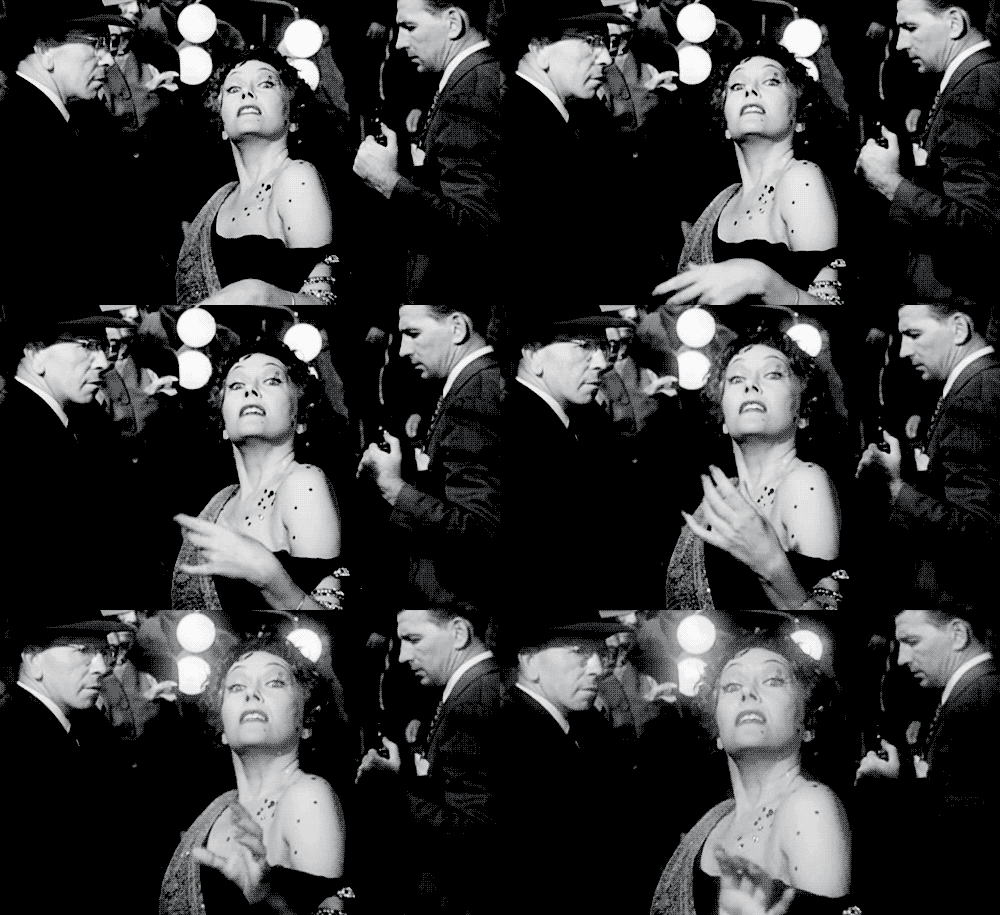
4. Norma Desmond – Sunset Boulevard
Norma Desmond, famed star of the silent film era, is your “Pissed
Off Diva” type of dysfunctional (my personal favorite). She’s pretty functional
in most other aspects of life, except for the belief that she’s still the bees
knees to the rest of the world… and f*ck
anyone who says otherwise! She’s also a tad
suicidal, so she is a little on the unstable side. Like the Beales, she
lives (almost) alone in a friggin’ huge mansion, but she hasn’t let it go to
shit like the Beales and the only animal she keeps around is a chimp (which is
dead and buried before we ever get to meet it). She has more money than Bill
Gates (adjusted for inflation and spends it like . She’s middle-aged and
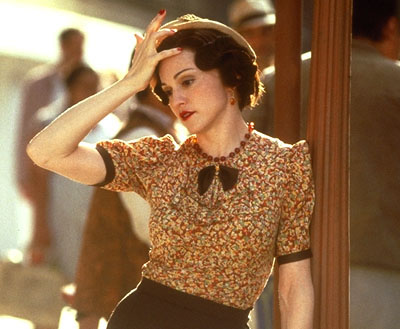
showing it, but still plans on playing the 16 year-old ingénue (kinda like Madonna in Evita)
in a movie she wrote a crappy script for. Everybody’s pretty much forgotten
about her after her career died 20-30 years ago (like Andie McDowell or Eddie
Murphy), but she still thinks she’s Jennifer Lawrence.
She takes on a broke writer as her editor-slash-gigolo and *spoiler alert!* ends up killing him and having a massive mental breakdown
when he shatters her “I’m still famous” fantasy and tries to walk out on
her. I like to think there’s a little
Norma Desmond in all of us… at least all of us who do some degree of performing
arts. No matter how flexible or easygoing or pleasant we may seem, we’re all
spoiled, spiteful little bitch divas at heart. I think some are just better at
hiding it than others… And anyone who says they aren’t is a dirty liar. I can’t
tell you how many times I’ve practiced my Tony Award speech in the shower or
silently shouted at a director “I AM THE GREATEST F*CKING STAR EVER!! WORSHIP ME, DAMNIT!!!” I can
relate, Norma. I can relate.
5. Rose - Gypsy
Madame Rose isn’t exactly dysfunctional; she’s just fracking
crazy with dysfunctional standards. She
is the ultimate stage parent who lives her dream life of stardom vicariously
through her two daughters. Chief NY Times theatre critic, Ben Brantley has described
Rose as "an armored tank on
autopilot, which finally crashes only minutes before the final curtain.” Truth,
Brantley. Truth. Over the course of her adult
life, Rose drives away three husbands, her current boyfriend/agent, all the
backup dancers in her daughters’ act, and one of her two children (the other
one almost gets away too, but they hug it out before it’s too late) with her relentless
ambition and makes absolutely no apologies. She takes her failed dreams that
never came true and relays them to her daughters as actual dreams she’d had the
previous night. She’s so starved for praise and approval that she smothers and
presses all she has and wants on to her embittered children. Kinda sucky,
right?
6. Don Quixote – Man Of La Mancha
Alonso Quijana, an impressionable old man who
has read way too many books of chivalry has lost his mind and now believes that
he should go a-questing as the knight-errant, Don Quixote de la Mancha. This
poor dude’s living in a dream world. He gets into fights with windmills (they
were GIANTS!), steals shaving basins
to serve as headgear, and reimagines seedy prostitutes as noble ladies. Needless to say, he’s flat out nutty. Luckily, he’s not one of those characters who
snaps and goes postal. He actually goes the opposite way and embarks on a quest
to battle injustice. Good for him. I find myself able to forgive
this guy for all his weirdness because of the sheer awesomeness of the show’s
songs. Seriously, have a listen to Brian Stokes Mitchell crushing “The
Impossible Dream” and tell me you don’t believe in miracles…
7. The Phantom – Phantom of the Opera
 The Phantom is your “Creepy, My-Parents-Didn’t-Love-Me
Stalker” dysfunctional. I can’t begin to count the number of things wrong with
this guy (I lightly touched on this in a previous article). I
mean it’s not entirely his fault. The Paris Opera house lets him get away with
SO much crap, no wonder he runs roughshod over everybody! Some people are on
Team Raoul. Some people are on Team Phantom. I am personally on Team Raoul
because I will not root for a team
that permits elaborate kidnappings, hypnosis, manipulation, and/or murder in
the name of love. That is not love,
my friends. That’s just sick. Besides, how well does the Phantom know this
broad anyway? Yeah, she’s hot and she’s got a beautiful voice, but that’s not
adequate grounds for a relationship! I don’t care how much Josh Groban’s voice stimulates my femininity, I’m not
gonna build fake mirrors in his bedroom that lead to a secret lair where I
seduce him while playing a ginormous pipe organ (or maybe I will…). And can you
imagine the number of health and building codes this guy is violating?! He’s
got a friggin’ lake with a boat, more candles than a vigil at Vatican City, a
Christine Daae shrine, and that ginormous pipe organ underneath the Paris Opera
House (really? NO ONE heard/noticed all that down there?)! I’ll bet he’s not in
the musicians’ union either. And don’t even get me started on the whole “I’m
hideous” card he constantly plays. I don’t fear and reject you because you’re face
is grotesque; I fear and reject you cuz I don’t want you stalking me or trying
to kill my boyfriend! First of all, you’ve got a badass mask and a cape, so stop
complaining. That almost makes up for your face entirely. Secondly, so what if
half your face is gnarly? Have you seen Sarah JessicaParker’s face? She starred in a super popular TV show and was a child
star, so you’ve got no excuse, my insecure
friend!
The Phantom is your “Creepy, My-Parents-Didn’t-Love-Me
Stalker” dysfunctional. I can’t begin to count the number of things wrong with
this guy (I lightly touched on this in a previous article). I
mean it’s not entirely his fault. The Paris Opera house lets him get away with
SO much crap, no wonder he runs roughshod over everybody! Some people are on
Team Raoul. Some people are on Team Phantom. I am personally on Team Raoul
because I will not root for a team
that permits elaborate kidnappings, hypnosis, manipulation, and/or murder in
the name of love. That is not love,
my friends. That’s just sick. Besides, how well does the Phantom know this
broad anyway? Yeah, she’s hot and she’s got a beautiful voice, but that’s not
adequate grounds for a relationship! I don’t care how much Josh Groban’s voice stimulates my femininity, I’m not
gonna build fake mirrors in his bedroom that lead to a secret lair where I
seduce him while playing a ginormous pipe organ (or maybe I will…). And can you
imagine the number of health and building codes this guy is violating?! He’s
got a friggin’ lake with a boat, more candles than a vigil at Vatican City, a
Christine Daae shrine, and that ginormous pipe organ underneath the Paris Opera
House (really? NO ONE heard/noticed all that down there?)! I’ll bet he’s not in
the musicians’ union either. And don’t even get me started on the whole “I’m
hideous” card he constantly plays. I don’t fear and reject you because you’re face
is grotesque; I fear and reject you cuz I don’t want you stalking me or trying
to kill my boyfriend! First of all, you’ve got a badass mask and a cape, so stop
complaining. That almost makes up for your face entirely. Secondly, so what if
half your face is gnarly? Have you seen Sarah JessicaParker’s face? She starred in a super popular TV show and was a child
star, so you’ve got no excuse, my insecure
friend!
8. Javert – Les Misérables
Obsessed is too small a word for Javert. He is of the belief
that the law is infallible and lawbreakers are incapable of redemption. Now
that’s a perfectly acceptable – though somewhat extreme – point of view to
have. But this guy spends 15 years relentlessly chasing after a man who not
only did the time for his crime (and then some) AND managed to turn his life
around. And it doesn’t matter the size
of the crime. Valjean stole a loaf of bread to feed his starving nephew and gets
sentenced to 19 years. So the French system of justice seems pretty faulty to
begin with. Javert forgoes a family/social/home
life and every other lawbreaker in France to harangue and harass one single
dude who actually reformed himself. I immensely respect his integrity,
discipline, and dedication to the law. But he doesn’t grasp or accept the
concept that humanity is a flexible beast with a lot of gray areas. Criminals
can change and laws can be bent. When Jean Valjean shows unprecedented mercy,
even after being put through hell by his overblown shenanigans, Javert’s mind
is blown. He realizes that his idea of
the justice that he has followed and invested into his entire life is severely
skewed. He’s so conflicted over this understanding that he commits suicide.
He’s been chasing after some boogieman that doesn’t exist for 15 years. It’s
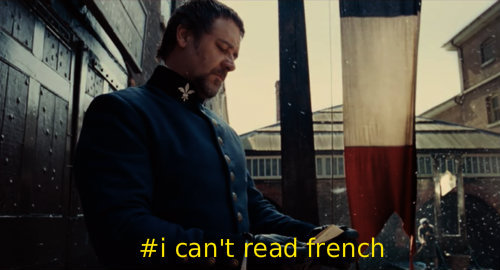
kinda tragic, but I can only sympathize so much cuz that is NO way to live! The only person more dysfunctional is the guy who cast Russell Crowe to play the character in the film version.
9. Fosca – Passion
 Not many people are familiar with Passion or the character of Focsa.
But those who are familiar tend not to side with her. She is, for lack
of a better word, pathetic. The sickly, self-deprecating cousin of an outpost
army colonel falls for the handsome captain, Giorgio, about 47 seconds after
meeting him. When she is able to go five
minutes without having a convulsive nervous breakdown, she can be found brazenly
throwing herself at him. She obsessively follows him around, whines about her
inability to have love or live a normal life, and even asks him to dictate a
fantasy letter from himself for her. Though he repeatedly assures her that she
is to remain firmly in the friend zone (because he’s downright repulsed by
her), she insists that she is unable to stop stalking him because “loving you
is not a choice.” Honey, that’s not
right. I’m sorry you’re extremely ill and lonely, but why drag the man you love
(against his will) through that shitstorm with you? I don’t even want my loved
ones around me when I’m hormonal so they don’t have to suffer too. Yet here she
is in a fabricated affair, torturing this poor man who’s initially in a
relationship with someone else. Haven’t you ever heard “if you love something,
set it free”? Cuz if you strangle and smother
it the way you’ve been doing, you’re gonna kill it! Audiences were so repulsed
by Fosca that during one performance, someone yelled, “Die, Fosca! Die!” when
she was having one of her meltdowns. But
judge for yourselves! The whole thing is on YouTube! At least the score’s amazing (as
always, Mr. Sondheim. As always).
Not many people are familiar with Passion or the character of Focsa.
But those who are familiar tend not to side with her. She is, for lack
of a better word, pathetic. The sickly, self-deprecating cousin of an outpost
army colonel falls for the handsome captain, Giorgio, about 47 seconds after
meeting him. When she is able to go five
minutes without having a convulsive nervous breakdown, she can be found brazenly
throwing herself at him. She obsessively follows him around, whines about her
inability to have love or live a normal life, and even asks him to dictate a
fantasy letter from himself for her. Though he repeatedly assures her that she
is to remain firmly in the friend zone (because he’s downright repulsed by
her), she insists that she is unable to stop stalking him because “loving you
is not a choice.” Honey, that’s not
right. I’m sorry you’re extremely ill and lonely, but why drag the man you love
(against his will) through that shitstorm with you? I don’t even want my loved
ones around me when I’m hormonal so they don’t have to suffer too. Yet here she
is in a fabricated affair, torturing this poor man who’s initially in a
relationship with someone else. Haven’t you ever heard “if you love something,
set it free”? Cuz if you strangle and smother
it the way you’ve been doing, you’re gonna kill it! Audiences were so repulsed
by Fosca that during one performance, someone yelled, “Die, Fosca! Die!” when
she was having one of her meltdowns. But
judge for yourselves! The whole thing is on YouTube! At least the score’s amazing (as
always, Mr. Sondheim. As always).
10. The Cast of Assassins – Assassins
 This one’s kind of self-explanatory. Anyone who makes an
attempt on the life of a nation’s leader to impress Jodie Foster has a few
major screws loose. If the title isn’t explanation enough, Assassins examines
the views and “motivations” of several men and women who attempted (successfully or not) to
assassinate a United States president. The show actually focuses
very little on the act of assassination and primarily on their pre or post
assassination activity. They converse with each other, explain their motives
(it makes sense to them), and assert the importance of the American Dream. They
speculate the simplicity of shooting a gun and the complexity of its consequences.
They send tape recordings to Leonard Bernstein, campaign to be the French
Ambassador, and eat KFC. The weird thing is that this show makes these
murderous, mentally imbalanced nut jobs somehow very endearing. You’re
obviously not questioning their lack of sanity or morals, because they’re sick,
twisted people. But like Sweeney Todd, these characters are given souls and
personalities on stage that make them appealing, funny, fleshed-out beings
instead of just a mug shot you see on TV.
This one’s kind of self-explanatory. Anyone who makes an
attempt on the life of a nation’s leader to impress Jodie Foster has a few
major screws loose. If the title isn’t explanation enough, Assassins examines
the views and “motivations” of several men and women who attempted (successfully or not) to
assassinate a United States president. The show actually focuses
very little on the act of assassination and primarily on their pre or post
assassination activity. They converse with each other, explain their motives
(it makes sense to them), and assert the importance of the American Dream. They
speculate the simplicity of shooting a gun and the complexity of its consequences.
They send tape recordings to Leonard Bernstein, campaign to be the French
Ambassador, and eat KFC. The weird thing is that this show makes these
murderous, mentally imbalanced nut jobs somehow very endearing. You’re
obviously not questioning their lack of sanity or morals, because they’re sick,
twisted people. But like Sweeney Todd, these characters are given souls and
personalities on stage that make them appealing, funny, fleshed-out beings
instead of just a mug shot you see on TV.
So there you have it, ladies and gentlemen: Ameselle’s Top
Ten Broadway Nut Jobs. Agree? Disagree? I know my dad was toying with the
notion of disowning me for not putting Sweeney Todd on the list. What do you think?
Honorable Mentions:
Dr. Orin Scrivello, D.D.S – Little Shop of Horrors
Judd Fry – Oklahoma
Jekyll/Hyde – Jekyll
& Hyde