Showing posts with label theatre. Show all posts

Sunday, September 21, 2014

All I Really Need to Know I Learned On Broadway

Ongoing unrest and racial tension in Ferguson, MO. Over two thousand reported deaths due to violence in Gaza. Ever-increasing hostility in Ukraine. ISIS acting a damn fool across the Middle East. Worldwide economic crises. Drug cartels. A major Ebola outbreak. Bees disappearing. Seal clubbing.

The world is a very scary place these days, filled with very scary people. The level of evil and cruelty humankind are capable of is simply staggering. Justifying themselves by acting in the name of God, love, money, justice, loyalty, and/or mental instability, people seem to ruthlessly manipulate, torture, steal, deceive, and destroy each other and lose very little sleep. It's enough to critically jade even the most optimistic among us. Humankind is indeed capable of a laundry list of atrocities. I believe, however, that that isn't necessarily how the world has to be; because people are also capable of great good.

I believe I owe a lot of my faith in humanity to my exposure to theatre. The theatre community consists of eclectic, eccentric individuals who routinely work together for a common goal. They combine their talents to create something special to share with others. They write and sing songs, dance, entertain, inspire thoughts and emotions, educate and expose us to foreign concepts, and, most importantly, tell stories to eager audiences. They take us to other places, other times; into other people's lives, and show us a world of variety to be embraced. They are an open-minded, sympathetic, inclusive group who live to create and give things to the world. Sure, they can be wildly catty, competitive divas, but they're sure not inciting riots or firing rockets in the streets.


I'm not going to name any names, but certain groups of people in the world are fueled by pure, unadulterated hate. They don't do anything constructive except when it results in f*cking someone else over. They don't build, they don't invent, they don't improve, they don't create, they don't make or write or question or cook or paint or read or explore or try new things. They just live their entire lives believing that they are right, the other billions of people on Earth are wrong and, therefore, do not deserve to exist. They take and abuse the lives of others because they feel that all life is not important or significant. They want to annihilate anything and everything in their path. Call me mean, but as a live-and-let-live person (except during football season), I truly have no respect or patience for this mentality because I find that if you're not going to contribute to the society that the rest of the world has made, you don't get to be part of that society. Theatre helped teach me this. If you don't pull your weight during rehearsals, you don't get to be part of the show on opening night (or worse, you don't get to go to the cast party). You are accountable because you are, in part, responsible for the collective production. If you develop a reputation for bringing the collective down, you won't be invited to come back and audition again.

I notice that the "creators" of the world are rarely fueled by hatred. People who have something they love to do that can be shared with others - be it theatre, art, dance, architecture, video game design, fashion, baking, butter sculpting, writing badly-written, best-selling erotic novels, beekeeping, etc. - don't have the time or energy for hate. They don't make space in their lives for such negativity because they'd rather make than destroy. I think this is what's missing in the lives of these extremists who do nothing but harm. They wouldn't be so inclined to destroy what others have built if they knew the pride and reward of building something themselves. They don't work collectively to make something for the world to see and admire. Nothing they invest in that is worth living for and preserving. But they really should try it. It's fun!

Of course, I'm not suggesting we all hold hands and sing "Kumbaya". But when I see the incredible, amazing, inspirational things people are capable of, I wonder why some people still feel the need to be so savage with each other. I may be naïve to believe in the intrinsic good in people. But in theatre (and any other artistic field), you have no choice but to trust that all the participants are going to pull their weight for the sake of the finished project. You learn to be a stand-up human being. You depend on others and they depend on you. Every individual in the cast, crew, and audience plays a part. Even if it's a flop, even if you're on stage for all of 30 seconds and have no lines, even if it's a 3-week run in a church basement, even if it's a theatrical production or a hippie commune or the next iPhone or a major city, establishing an aggregate of humans that runs on equal parts giving and receiving is special and, in my opinion, very much worth living for.

Sunday, March 9, 2014

Wonderful Town - The College Edition!

At the recent urging of my frequent Broadway Viewing Buddy (a.k.a. “Dad”), I will be discussing a lovely little show that I just had the pleasure of attending. Ursinus College’s very well-received and well-executed production of Wonderful Town closed last Sunday, so you just missed it!

THE LOGO for the 2003 revival of "Wonderful Town." CourtesyWonderful Town

Music: Leonard Bernstein
Lyrics: Betty Comden & Adolph Green
Book: Joseph A. Fields & Jerome Chodorov
Based On: Ruth McKenney’s The New Yorker-published collection of autobiographical short stories; Fields's & Chodorov's resulting play, My Sister Eileen
Broadway Debut: 1953
Tony Nominations/Wins: 5/5!


Wonderful Town follows two sisters from Columbus, Ohio – sharp, witty Ruth and vivacious, blonde (and not Irish) Eileen – pursuing writing and acting careers, respectively, in New York City. They arrive awestruck and immediately acquire lodgings in a most undesirable basement apartment; featuring a “loveable” landlord, “customers” of the room’s former tenant, Violet, and frequent dynamite blasts from the new subway construction mere feet below them. They battle early onset homesickness and make the best of things. Ruth makes the rounds with her stories while Eileen gets free lunches from a smitten Walgreens manager. They chase their dreams and find love while weaving through the lives of other Christopher Street inhabitants: living-in-sin neighbors Helen and the Wreck; sleazy-but-ultimately-redeemed  newspaperman, Chick Clark; Village Vortex nightclub owner, Speedy Valenti (where they each find some amount of success); magazine editor, Bob Baker; some Brazillian Navy cadets with a penchant for the “Conga”; and a slew of Irish cops with a penchant for Eileen.


This musical is a true ode to everything that is the Big Apple. It centers on everything “wonderful” about NYC and what can happen when you venture there to find life and love. It can harden you and make you long for simplicity, but the beat and vibrant energy of the city can also invigorate you and present new things every day. The ambiance and feel of Wonderful Town is upbeat and brightly-colored, but I wouldn’t necessarily call it a fluff musical (like 42nd St. or Anything Goes). The songs may not be as recognizable or gritty as others composed by the great Leonard Bernstein. But his score is full of intricate nuances that reflect the overwhelming blur that is NYC. Its unevenness and hectic hustle illustrate a sophistication that surpasses “fluff” musical composition.  I’m not trashing Anything Goes, but the wit is more in the lyrics (Cole Porter’s specialty) with an accompanying snappy tune that takes a back seat to the words instead of the other way around. Bernstein’s style of composition is complex and really sets the mood for the piece (much like Sondheim) and Wonderful Town is no exception.


Ursinus College’s recent production was quite a refreshing thing to see: young people taking a period piece and not only understanding such a bygone bit of American History, but also immersing into that time period and making it believable for audiences. I so often see performances where it looks like the actors are just playing dress-up in front of a period backdrop. But these kids had very little backdrop to play off of (I’m guessing they spent most of their budget on the costumes, which were really good for a college production!). They really invested in the time period they were portraying and it actually looked like they belonged there. Looking comfortable in a time, place, and way of life different from yours is not an easy thing for anyone to accomplish, so it’s especially exciting to see such young performers tackle it like champs. In a world where bigger, faster, shinier reigns supreme, it does an old soul like me good to see young people respecting and working to uphold the significance of a time that is not their own. Bravo, you young whippersnappers!

Friday, November 29, 2013

"Merrily" Gets A Makeover


I’ve been thinking a lot about a special evening at the movies last month. Theatres across the country presented a one-night screening of the West End production of Sondheim’s Merrily We Roll Along.  I don’t know if you’ve heard, but I’m a bit of a Sondheim groupie.  So anything Sondheim-related arguably makes me more excitable than a Muppet on ecstasy. However, I was pretty unfamiliar with this show going in.  I knew it owned the heartbreakingly beautiful number, “Not A Day Goes By” AND that it was Sondheim’s biggest critical and second biggest commercial flop (though it closed after only 16 performances, it still didn’t beat Anyone Can Whistle’s painful 9). Did I care? No sir-ee!  I booked my ticket and skipped all the way to the theatre. I’m glad I did buy tickets in advance, because it was PACKED (about 90% full, which is about 40% more than most drum corps show screenings I’ve been to)! I couldn’t believe the amount of people this flop drew in little ol’ King of Prussia, PA. Even more amazing was the surprisingly diverse age range (20s to Older-Than-Dirt).  I expected a bunch of blue-hairs, but not young whippersnappers like me!  But then again, unexpected sci-fi nerds of all shapes, sizes, and ages come out of the woodwork too for comic-con…

Merrily We Roll Along
Music & Lyrics: Stephen Sondheim
Book: George Furth
Broadway Debut: 1981
Tony Nominations-Wins: 1-0
Based On: George Kaufman & Moss Hart’s play of the same name


Story:
Merrily We Roll Along observes, in reverse, the lives of three friends – composer, Frank; playwright, Charley; and writer, Mary – across a span of 20 years. The show is played out in a series of reversed chronological vignettes, mapping out significant events that shape the friends’ lives and their shift from hopeful, idealistic youth to compromised and embittered middle-age.  As the years roll not-so-merrily back over twenty years of his life, we see how Frank (Friend #1) went from penniless composer to wealthy producer, and what (and who) he gave up to get there.  He begins the show as a successful Hollywood producer hosting a swinging party celebrating yet another of his hit fluff movies. Alcoholic, resentful theatre critic (Friend #2), Mary, sits in the corner, stewing.  When the sore subject of playwright, Charley (Friend #3), is brought up, Mary can stand the party’s frivolity no longer and drunkenly chastises Frank for being a sellout, insults his guests, and leaves. The years peel back to gradually reveal Frank and Charley’s catastrophic falling out (on national television), Frank’s bitter divorce as a result of infidelity with Broadway star, Gussie, and Mary’s long-lasting, unrequited love for Frank. Each of the three friends is faced with difficult decisions throughout their lives that compromise their careers, relationships, and morals.  Many of their choices are made to achieve the success they so desired in their youth, but drew unexpected consequences.

History:
Though the score was critically acclaimed (or course!), the original production was riddled with flaws and problems. Teenagers were initially cast in the lead roles (first mistake). Staging was also an issue: the audience was extremely confused and had trouble understanding what was going on in the story. Telling the story in reverse and featuring a rather unlikeable hero only complicated matters.  The confusion resulted in a last-ditch effort for clarity with the actors all wearing sweatshirts with their characters’ names on the front (second mistake).

However, former-cast-member-turned-West-End-director, Maria Friedman made some drastic changes that evolved Sondheim’s work (with his blessing, of course) into a much more engaging, relatable production. She ditched the green teenagers in sweatshirts for seasoned actors in their forties and emphasized Frank’s appealing charisma and vulnerability.  Her staging and fleshed-out characters eliminated confusion and gave the audience a likeable hero.


Message:
When asked why bother digging up such a failure of a show for a revamp, Friedman replied that it is because of the ideas all his musicals contain. “There are rarely conclusions there, just ideas so the shows can keep moving and growing, and each age group will have an entirely different take on a piece because it encompasses so many different aspects of humanity in its mess and its effort and its courage.”

I. LOVE. That!!!  His shows really are timeless and capable of reevaluation, as they push ideas over plots. Among the many things I love about Sondheim, I think he truly excels at making the audience think.  He doesn’t tell you what to think; he just forces you to think.  And there is no right answer in his shows.  Sondheim rarely gives us black and white situations because they rarely exist in reality.  Frank makes many choices in Merrily, but his choices are real and human and full of conflict.  The audience has/gets to decide if his choices were right or wrong.  He tends to do that in most of his work.  He’s not concerned with putting on a good show; he wants to communicate thoughts over plots. Sure, some of his plots are better than others.  Even though it’s received a creative overhaul, Merrily will never be Into The Woods or Sweeney Todd. But the tough, complex situations are still there, inviting us to interpretation.

In Merrily, we see the characters make choices that spiral their lives downward and away from each other. It's easy for us to say that they're doing the wrong thing or making seriously bad interpersonal moves. It's easy for us to sit and pass judgement on these people as outside observers. But how often do we make bad choices ourselves that we can only realize were wrong in retrospect.  We are rarely able to see the long term consequences of our actions in the present.  We can only look back and determine after the fact if we made the right decisions.  As the reverse chronological order of the show reflects, we can't look into the future and see where we end up. We can only look back into the past and see how far we've come.

In a world of tablets and Playstations and iPhones, where we can play on autopilot ant get any information we desire by pressing a button, it’s truly refreshing to still have an abstract outlet that compels us to think for ourselves.  You get a composer like Andrew Lloyd Webber (I’m really not trying to trash ALW, he’s just a good example!), whose work is like an ice cream bar.  You can throw a plethora of toppings and sauces and flavors on it, but at the end of the day, it’s still just a scoop of ice cream underneath. Then you look at Sondheim and you’ve got a succulent, gourmet dessert buffet.  You’ve got rich, decadent chocolate; fluffy, sweet cream; tart fruits and berries; bitter coffee (optional)… Sondheim is, in short, a festival of flavor.  It’s never just one taste or sense or emotion.  You have a whole buffet to choose from!

Sunday, November 10, 2013

Ding-Dong: Hello!


Hello! Happy November, people of the world! Today, we’re going to discuss my most recent Broadway musical experience: Book Of Mormon!

Omigod, Amy! How did you EVER get tickets for BOM? The answer is quite simple, young padawan: Standing Room!  My mother and I arrived at the standing room line about 2½ hours before curtain (we sped over as soon as Annie – starring the hilarious Jane Lynch! – let out). We were almost the last two to be granted standing room spots. But by golly, we got in!!!  And for all those weirdos stunned by our willingness to wait for 2½ hours for a musical, I say we are no weirder than those who camp out for days for Rolling Stones tickets or park their asses in front of Toys-R-Us on Thanksgiving to acquire some flavor-of-the-week material object on Black Friday. And I’d do it all again (probably will), cuz it was totally worth the experience …and the $27 ticket price!

Book Of Mormon
Music, Lyrics, & Book: Trey Parker, Matt Stone, & Robert Lopez
Broadway Debut: 2011
Tony Nominations-Wins: 13-9


Book Of Mormon follows two Latter Day Saints missionaries – devout, clean-cut, naïve, Orlandophile, Elder Price and awkward, also-naïve, sci-fi aficionado and compulsive fibber, Elder Cunninham (who has never actually read the Book of Mormon) – on their 2-year mission assignment to impoverished, AIDS-riddled Uganda.  They have trouble connecting with the local villagers, as they are more preoccupied with poverty, famine, AIDS, and a genocidal, anti-clitoris warlord. 


Trey Parker and Matt Stone’s (the creators of South Park, in case you didn’t already know) style of humor is crass, crude, obscene, and remarkably genuine.  Absolutely nothing is sacred on South Park (which is where their in-good-fun Mormon-bashing began).  However, despite the offensive content, the four letter words and immature shenanigans often make way for a valuable moral or nugget of common sense to be learned at the conclusion. Even South Park has shining moments of real morality and social awareness stuffed in the gaps between fart jokes and shock value gimmicks.  The stars of the show (four loveable, foul-mouthed Colorado fourth-graders) often have something substantial to learn by the end of each episode, after trudging through the often puerile antics of their clueless parents and adult townspeople.   

Parker & Stone amplify that smut-with-a-message motif in Book Of Mormon.  BOM makes hilariously merciless jabsat Mormon faith, credibility, customs, and doctrines.  It lampoons famed musicals of old with song styles and references.  It mocks the AIDS pandemic in Africa, murderous warlords, organized religion, and female circumcision.  Yet, it also wraps the audience in the reminder that even though organized religion may seem bizarre and may not be for everybody, even when we stumble or lose our way, even though the world/people/God can be devastatingly cruel, humanity and faith in human perseverance can be found anywhere, even ravaged Uganda.  BOM shows that “Sal Tlay Ka Siti” isn’t a real place, but a metaphor; an idea of how collectively striving for perfection makes us “holy”.  It’s up to people to create paradise on Earth by being and doing the good they wish to see in the world and being “really fucking polite to everyone.”

NABULUNGI: But we aren’t going to Sal Tlay Ka Siti!


VILLAGER: Nabulungi…Sal Tlay Ka Siti isn’t an actual place! It’s an idea….a METAPHOR.


MAFALA HATIMBI: Yes, you must remember that prophets always speak in metaphors.


VILLAGER: You don’t think Joseph Smith actually fucked a frog, do you? That’s fucking stupid.


I find it simply deplorable when people shit on other people for the sake of shitting on other people.  I’m not saying we should all hold hands and sing “Kumbaya,” but can’t we just leave each other the fuck alone?  Some people think that’s the only way to succeed in life (“…two kinds of men: The one staying put in his proper place andthe one with his foot in the other man’s face.”), as if we’re incapable of being human beings to each other. Book Of Mormon does the opposite.  BOM encourages the push to make life better, even though it’s far from easy.  And that’s basically Rule #1 of any Judeo-Christian rulebook: Don’t be an asshole.  I realize a lot of people have trouble with this concept, but I assure you it’s really not that difficult. Just try it!


Okay, rant over.  So basically, Book Of Mormon lives up to its hype.  There’s something for everyone.  It’s funny as hell with catchy, tunes with substantial lyrics, an uplifting message, and sick, twisted humor.  It’s also all any South Park fan would expect when Trey Parker & Matt Stone attempt to put on a musical. I highly suggest parking your derrières at the Standing Room line for 2½-3 hours and see it (Tip o’ the Trade: If you go with a friend, one of you stay in line while the other gets takeout so you both don’t starve, lose your spot, pay tip, OR pay the sharing charge the NYC restaurants tend to slap on you)!
 
Fun Fact: The Broadway production came in under budget at $9 million (as opposed to the expected $11 million), which the show recouped in just 9 months of performances!


Saturday, October 26, 2013

THAT'S Your Favorite Musical??? - Part 2


Greetings to you, fellow musical addicts (or people who should be musical addicts if you’re reading this blog)!  We have come to entry #2 of musicals whose popularity and acclaim I simply do not comprehend. Feel free to peruse Musical #1 and state your opinions (even though I’m right)!  


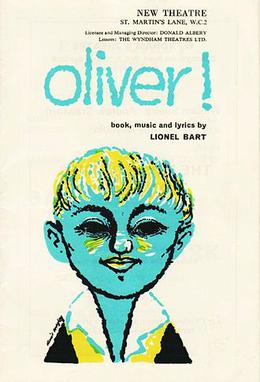
Oliver! (Yes, that exclamation point is there intentionally. What-ev...)
Based on: Charles Dickens’ novel, Oliver Twist
Music, Lyrics, Book: Lionel Bart
Broadway Debut: 1962
Tony Nominations: 10 (only won 3, because Forum SWEPT that year!!!)

Like My Fair Lady, I also walked out at the intermission of this show at the Media Theatre because it was simply unbearable (don’t blame the Media Theatre for this.  They actually put on really good stuff!).  I will admit off the bat that I may be overly harsh with my views on this show, as I have had minimal exposure to it.  I’ve never read the book or seen the show all the way though (However, I did make my way through a 7 part community theatre production of the show on YouTube just to say I’d done my homework.)  But I gotta say the exposure that I have had has been quite off-putting.

Oliver! follows the journey of a wholesome little British orphan boy: Brought up in a workhouse, he gets kicked out and sent to live with an undertaker after asking for more dinner.  He soon escapes the undertaker and ends up with a gang of minor pickpockets and their seedy criminal coach, Fagin.  And on top of all that 19th century London sadness, Oliver gets wrongly tagged at the scene of a botched handkerchief heist, but the wealthy victim of said crime (who turns out to be Oliver’s relative) takes him in, much to the chagrin of Fagin and sociopath, Bill Sikes, who believe that Oliver would rat them out.  So after several hijinks, some kidnap attempts, a murder, and a deus ex machina, all is well in the end for our orphan with a heart of gold.
We’ll start with the cockney accents.  I must say they bother me.  Immensely.  I don’t know which cast version I’ve had the displeasure of hearing, but they did not hire the most pitch-aware children, if you get what I mean.  My flesh crawls every time I hear the intro to any of the child ensemble numbers. It abuses my earballs enough when adults sing flat. But when you’ve got children singing flat WITH Cockney accents, you’re just being mean.  I don’t care if you’ve got 20 of the greatest 9 year-old boy singers on the planet; someone’s gonna be flat. However, it’s a British show and I guess British people get it. They clearly did something right. It ran at the West End for 2,168 performances! Some Americans get it (apparently), but it’s truly a British piece.  Not an American piece with British characters or a British setting.  100% British.  Does this mean I’m anti-British?  I like some British stuff: Dr. Who, fish & chips, those awesome red phone booths, the Spice Girls (in small doses), Monty Python & the Holy Grail, and those little hats Kate Middleton wears (she’s so hoity-toity, it makes my teeth hurt!). So I don’t think I’m anti-British; must be the show is shitty and everyone else is a sucker!

I understand the significance of the book, as it covers the then taboo matters of child labor, child crime, class clashes, and poverty.  It’s classic (British) literature.  A timeless novel, blah, blah, blah.  But is this just a case of a popular book on stage? That’s nothing new.  But just because it’s a beloved book doesn’t mean it’ll make a good musical. Look at Carrie! And vice versa.  Just because it’s a great musical doesn’t mean it’ll make a great movie (I’m lookin’ at you, Into the Woods.  You’re already on very thin ice with that sorry excuse for a cast. Did Les Miz + Russel Crowe not teach you anything?  You better not eff this up, Rob Marshall!)

I have read the synopsis for this show and I just find myself thinking, “So what?”  If Oliver had walked up to ask for more breakfast and the gruel dispenser guy in the cafeteria just said “No, you don’t get any more. Now go sit down, ya little punk,” the story would be over much quicker and I would be just as happy.  At least we would have bypassed that drawn out declaration of “Ooooooooollliiiiivvaaaahh!” in the titular second number.  And technically, with that deus ex machina where some beggar with a stolen locket (that belonged to Oliver’s mother/Mr. Brownlow’s niece) shows up, Oliver most likely would have ended up with his moneybags relative in the end anyway.  So all that gallivanting with singing pickpockets was kinda unnecessary at the end of the day.

Now let’s look at the songs. With an exception here and there, most of these songs (to me anyway) sound like they could have been written by some teenagers for a school project on Oliver Twist.  I gather very little feeling and/or plot progression from them.  Take “Food, Glorious Food” for example. Check out this little snippet of lyrics:

Oliver Twist
Food, glorious food!
Don't care what it looks like --
Burned!
Underdone!
Crude!
Don't care what the cook's like.
Just thinking of growing fat --
Our senses go reeling
One moment of knowing that
Full-up feeling!


Clearly these kids are hungry and dream of eating from the big kids’ buffet.  But do we need a wordy, banal filler song to convey that?  And the same goes for just about all the other stop-the-show-and-sing numbers in this show.  I’m aware that I’m a bit of a snob when it comes to music and lyrics. I want there to be substance and emotion in a show tune.  And I don’t mind if there’s a lame song or two thrown into an otherwise golden score, but I’d say about 90% of the songs in this show don’t deliver for me and resemble a brood of melodic love-children stemming from an evening with a rhyming dictionary.
  
2013-05-17-LizLemonOhBrother.gifI will admit to enjoying the ballads, “Where Is Love” and “As Long As He Needs Me.”  However (FYI), the latter is sung by Nancy, a backstreet girl in a severely abusive relationship with the aforementioned sociopath, Bill Sikes.  That said, I can’t really condone her character singing it. Now I’m really not trying to be a feminist here (see Part 1 for views on Eliza Doolittle’s pathetic moral stance), but what is the deal with these passive female characters inviting their men to step all over them?!  Eliza’s just lame for doing her thing, but Nancy’s thought process is not only wrong, it’s harmful (and fatal) to her health!  That song also puts the writers in a spot if they ever want to do a revival (or a movie. See below).  Portraying domestic violence as an acceptable thing is “no bueno” in today’s media. When I saw Fiorello in NYC last year, they changed some unsavory-by-today’s-standards lyrics in a song that brings up domestic violence in a particular verse. So in this case, how can anyone change the lyrics to 1) One of the most popular, well-known songs in the show? and 2) A song where ALL of the lyrics are about staying with someone because you’re in “love” after they proceeded to beat the shit out of you? Maybe Britain’s cooler about that stuff than Americans… *Spoiler alert* Nancy dies at the end from a series of club blows to the head, delivered by her abusive boyfriend. You stay classy, Britain!

In other news, Sir Cameron Mackintosh (producer of Les Misérables, The Phantom of the Opera, Mary Poppins, Oliver!, Miss Saigon and Cats fame) has announced that he’d like to do a film remake of Oliver! shooting for a 2016 release.  Great.  I’m sure he’ll find spots for the usual seasoned movie-musical butchers, Meryl Streep, Johnny Depp, and some Disney child star hopped up on Auto-Tune.

So there you have it: I don't like Oliver! for the Britannia overload, the female lead's lame life choices, and the obnoxious, weak sauce songs.   It simply does absolutely nothing for me. 

You got something to say about it?