Sunday, September 21, 2014

All I Really Need to Know I Learned On Broadway

Ongoing unrest and racial tension in Ferguson, MO. Over two thousand reported deaths due to violence in Gaza. Ever-increasing hostility in Ukraine. ISIS acting a damn fool across the Middle East. Worldwide economic crises. Drug cartels. A major Ebola outbreak. Bees disappearing. Seal clubbing.

The world is a very scary place these days, filled with very scary people. The level of evil and cruelty humankind are capable of is simply staggering. Justifying themselves by acting in the name of God, love, money, justice, loyalty, and/or mental instability, people seem to ruthlessly manipulate, torture, steal, deceive, and destroy each other and lose very little sleep. It's enough to critically jade even the most optimistic among us. Humankind is indeed capable of a laundry list of atrocities. I believe, however, that that isn't necessarily how the world has to be; because people are also capable of great good.

I believe I owe a lot of my faith in humanity to my exposure to theatre. The theatre community consists of eclectic, eccentric individuals who routinely work together for a common goal. They combine their talents to create something special to share with others. They write and sing songs, dance, entertain, inspire thoughts and emotions, educate and expose us to foreign concepts, and, most importantly, tell stories to eager audiences. They take us to other places, other times; into other people's lives, and show us a world of variety to be embraced. They are an open-minded, sympathetic, inclusive group who live to create and give things to the world. Sure, they can be wildly catty, competitive divas, but they're sure not inciting riots or firing rockets in the streets.


I'm not going to name any names, but certain groups of people in the world are fueled by pure, unadulterated hate. They don't do anything constructive except when it results in f*cking someone else over. They don't build, they don't invent, they don't improve, they don't create, they don't make or write or question or cook or paint or read or explore or try new things. They just live their entire lives believing that they are right, the other billions of people on Earth are wrong and, therefore, do not deserve to exist. They take and abuse the lives of others because they feel that all life is not important or significant. They want to annihilate anything and everything in their path. Call me mean, but as a live-and-let-live person (except during football season), I truly have no respect or patience for this mentality because I find that if you're not going to contribute to the society that the rest of the world has made, you don't get to be part of that society. Theatre helped teach me this. If you don't pull your weight during rehearsals, you don't get to be part of the show on opening night (or worse, you don't get to go to the cast party). You are accountable because you are, in part, responsible for the collective production. If you develop a reputation for bringing the collective down, you won't be invited to come back and audition again.

I notice that the "creators" of the world are rarely fueled by hatred. People who have something they love to do that can be shared with others - be it theatre, art, dance, architecture, video game design, fashion, baking, butter sculpting, writing badly-written, best-selling erotic novels, beekeeping, etc. - don't have the time or energy for hate. They don't make space in their lives for such negativity because they'd rather make than destroy. I think this is what's missing in the lives of these extremists who do nothing but harm. They wouldn't be so inclined to destroy what others have built if they knew the pride and reward of building something themselves. They don't work collectively to make something for the world to see and admire. Nothing they invest in that is worth living for and preserving. But they really should try it. It's fun!

Of course, I'm not suggesting we all hold hands and sing "Kumbaya". But when I see the incredible, amazing, inspirational things people are capable of, I wonder why some people still feel the need to be so savage with each other. I may be naïve to believe in the intrinsic good in people. But in theatre (and any other artistic field), you have no choice but to trust that all the participants are going to pull their weight for the sake of the finished project. You learn to be a stand-up human being. You depend on others and they depend on you. Every individual in the cast, crew, and audience plays a part. Even if it's a flop, even if you're on stage for all of 30 seconds and have no lines, even if it's a 3-week run in a church basement, even if it's a theatrical production or a hippie commune or the next iPhone or a major city, establishing an aggregate of humans that runs on equal parts giving and receiving is special and, in my opinion, very much worth living for.

Tuesday, August 19, 2014

What's It All About, Newsies?


As most of the Broadway world knows, Disney’s mega-smash theatrical production of Newsies will be closing on August 24 (but don’t worry, “Fansies”, the national tour kicks off this October). I had two initial thoughts about Newsies before seeing it: 1) Judging by the insanely loving response the show received from fans of the original movie and frequent theatregoers alike, I figured this show had more time than the barely 2½ years it ultimately got; and 2) Judging by the number performed at the Tonys, it was an all-singing-all-dancing (not that there’s anything wrong with that) overhype.  Read on and learn if I was right!

Newsies
Music: Alan Menken
Lyrics: Jack Feldman
Book: Harvey Fierstein
Broadway Debut: March 29, 2012
Tony Nominations/Wins: 8/2
Based On: 1992 cult film Newsies, which was based on the 1899 Newsboys Strike


Upon hearing of the show’s imminent closing, my mom said, “Amy, we’re going to see this before it closes!” So we rode on up to the Big Apple, said “Hi” to the Naked Cowboy, had a disgusting amount of deliciousness at Southern Hospitality BBQ in Hell’s Kitchen (apparently that’s Justin Timberlake’s place), unsuccessfully tried to find some homeless people, and finally sat down to an evening of singing, dancing teenagers in their late 20s and early 30s doing insane pirouettes and flips… and maybe a story somewhere.

The Story:
This high-energy tale based on the Newsboys Strike of 1899 centers on New York teen, Jack Kelly, and a band of fellow orphaned Newsies who sell “papes” to the city of New York. New York World publisher, Joseph Pulitzer increases the cost of the newspapers to the Newsies by ten cents per hundred to outperform his competitors. The Newsies, led by Jack, go on strike and organize a union (of sorts) to demand the former price be reinstated. Fledgling reporter Katherine scoops up the story as well as Jack’s heart (ew). The newsies stage a protest, which is broken up by the police and strikebreakers. Discouraged, Jack wishes to flee the worries and strife of New York for sunny Santa Fe. But Katherine’s story makes the front page of the New York Sun and the Newsies vow to continue the strike. Despite revelations that Jack has a criminal record and Katherine is actually Pulitzer’s daughter (*Gasp!* Wait, WHAT?!), their romance blooms. Using an old printing press of Pulitzer’s, the newsies print their own newspaper, exposing Pulitzer’s price hike to the city, as well as the abuses conducted in the city’s Refuge (juvie). Governor Theodore Roosevelt reads their paper and puts the kibosh on Pulitzer and the Refuge. Pullitzer offers a compromise to buy back every “pape” the Newsies don’t sell; the strike is over! Jack is about to leave for Santa Fe, but has a change of heart (ew) and stays a Newsie. There is much rejoicing.

The Reaction:
My initial assumption that Newsies is an overhyped piece of Broadway entertainment turned out to be pretty true. The dancing was spectacular and the creative use of sets was impressive. However, I found the subject matter (or lack thereof) to be quite a missed opportunity. The movie had some pretty dark moments, emphasizing the risks these kids took to stand up for their rights. They organized amongst themselves to show that they would not be abused by the man. There were dangers and consequences to what they did, as well as a rippling influence that expanded to and affected all child workers in the city. I found the show didn’t touch on any of that as well as they could have.  Most of the time was spent on Jack either bantering with Katherine, or wishing he could run away to Santa Fe… and gratuitous dancing. They had the chance to tinker a decent movie into a compelling, anti-authoritarian, little-guy-wins, David vs. Goliath journey that could have focused on child labor/treatment at the turn of the 20th century, newspaper magnate corruption, class warfare, and/or the importance of family and friendship. Heck, how about a girl reporter! But they merely scraped each of these surfaces and stuck primarily to dancing. Pity…


During the early development of Fiddler on the Roof, choreographer Jerome Robbins constantly asked the creative team (composer, Jerry Bock & lyricist, Sheldon Harnick), "What is the show about?" After several suggestions alluding to the show's plot, one of them stated, "...It's about tradition." Robbins replied, "THAT'S what it's about — and now we have to tell the audience." I think someone should have asked Newsies' creative team what their show was about.

As for my other initial assumption the Newsies should have run longer, I also believe I was right. Since this was not the hard-hitting world changer I dreamed of, it is perfect for dance fans, movie die-hards, and excellent tourist fodder. It is a light, bright, energetic piece that keeps you interested. So they've at least got that going for them. As Chicago has shown for years, crazy dancing and weak plots sell! 

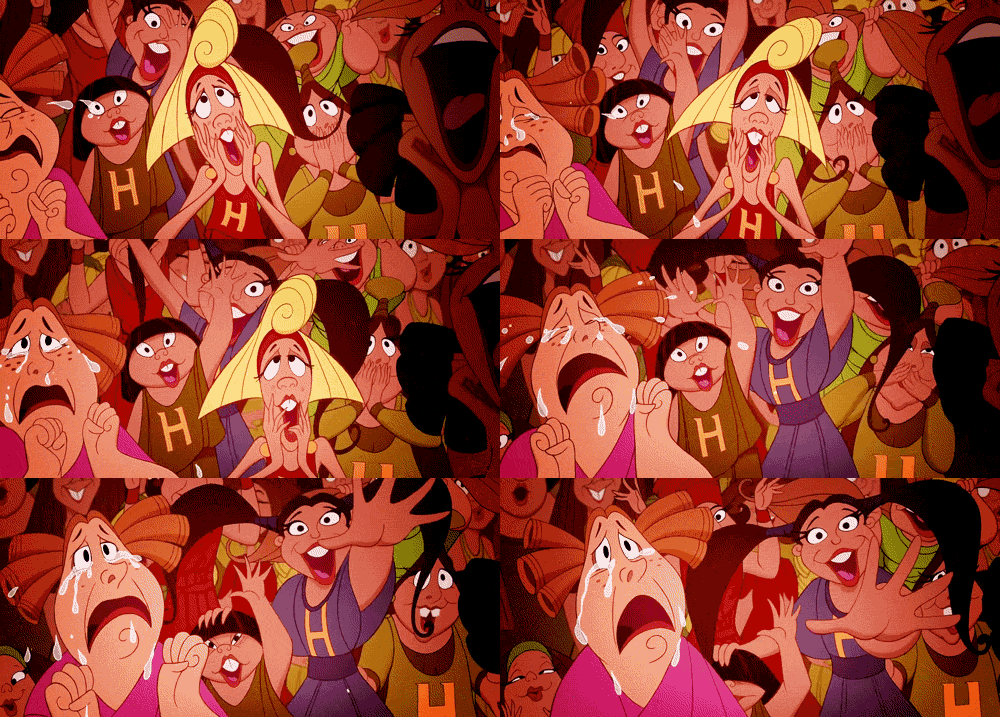
What really took me by surprise was the audience. I have only heard a Broadway crowd flip out like this once: when Kristin Chenoweth and Idina Menzel made their respective entrances in Wicked (I gotta admit, I myself may or not have made a mess in my pants when I saw them). However, there was no star power at this performance. In fact, I found the female lead’s voice considerably weak for Broadway caliber (she had mad dancing skills, but her singing? “Meh” at best). Yet the house practically shook at the end of almost every song. Sure, the dancing was great. But I was watching very closely and I didn’t see Justin Bieber or Elvis in the building, so I say cool your jets, people. This isn’t A Chorus Line. But then again, they were giving the love like it was going out of style. Maybe they saw something I didn’t.

Friday, July 25, 2014

Grease: Hopelessly Devoted To Selling Out For Social Acceptance


I doubt I will be met with much argument when I state that teenagers are strange creatures. These half-child-half-adult beings are each a sea of new hormones, budding with new body parts and functions. It’s a wild environment til their bodies and priorities (relatively) balance themselves out. And on top of all that, there’s romance. Teenagers start trying out intimate relationships at what I deem the dumbest possible time. They are generally at the most immature, emotionally insecure, and financially unstable points in their lives. Yet they see, to clumsily pursue this activity above all others during these formative years with both guns blazing. The only sure thing they’ve got working for them is their innate sexual combustibility. On that note…

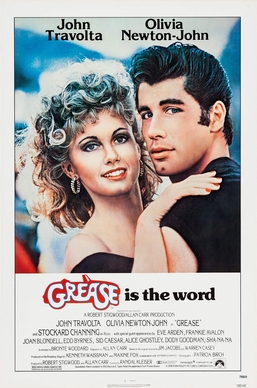
Who doesn’t love a bunch of singing, dancing teenagers in their late 20s and early 30s, facing the trials and tribulations of high school, summer love, make out cars, pregnancy scares, and whatever the “Hand Jive” is? Today, we’re going to talk about the original “High School Musical,” Grease. I’m gonna stick primarily with the film version, as I’m assuming that’s the one most folks are familiar with. If you care to challenge me on that, then you can go and write your own witty, well-informed blog!

Grease
Music, Lyrics, & Book: Jim Jacobs & Warren Casey
Broadway Debut: 1972 (1978 Film)
Tony Nominations/Wins: 7/0
Grease is a doo-woppin’, Bad-Boy-meets-Goody-Goody-Girl story of love, cliques, cars, high school dances, and friendship, featuring true role models for today’s insecure teenagers. The movie is a beloved classic (one of the few movie musicals [along with Chicago] that might actually be better than the stage version!) that chronicles teenage tomfoolery and irresponsibility, inspiring Halloween costumes and drag queens alike. I myself have been an avid fan of the movie since the tender age of 9 (it was edited for TV, so I didn’t see the too-hot-for TV version until way later). I loved seeing the Mexican standoff between the greasers, the cheerleaders, the jocks, the nerds, and the square adults played out before me. My 9 year-old self couldn’t wait to get to high school and hang out with the cool kids (silly me. I was below nerd status for those 4 years). However, as I got older and saw the film in my post-teen years, I became rather disturbed by the musical’s ending. Just as Danny is about to discard his T-Bird membership and (unsuccessfully) go jock to pursue Sandy, she appears – smoking (literally and figuratively) – in leather pants, enough teased hair and makeup to choke a horse, and a badassattitude change. She changes her whole game and morphs from a wholesome, Sandra Dee-esque All-American into the ultimate 1950s sex kitten in one afternoon.

I’ve become very disappointed in Sandy. Instead of consenting that her man (and his buddies) is too shallow to accept her for what she is, she decides to change everything about herself to impress him. I call shenanigans, Sandy! You were once a young lady of principles who stayed true to herself. Sure, you were so sugary-sweet and innocent, you were giving us diabetes. But if you’re gonna make a change, how ‘bout a gradual, mature change that’s for the better instead of adopting an entirely different persona (which you once opposed) just to make your man happy? And may I point out that this transition happened on the Very. Last. Day. of high school? You do realize that you’ll probably have one more “Summer Lovin’” summer between you before you go your separate ways, right? Be it college, career, prison, etc., I’ve got a sneaking suspicion it’s not gonna work out. I know it was more common for high school sweethearts to make it back then, but if you’ve gone from Sandra Dee to Sandra D. Minatrix (see what I did there?) in one day just so your man will like you again, I honestly doubt the endurance of your future together. Sorry ‘bout ya, but I think you need a Teen Angel’s advice more than Frenchy does at this point.


Saturday, June 28, 2014

Follies: Live. Laugh. Love. Then Move On For Pete's Sake!

Have you ever experienced a show/cast recording (even movie) that simply got under your skin? A show that was inexplicably mesmerizing, not necessarily because you loved or hated it; and you just had to go back and listen to the piece again and again to try and fully grasp what you had just seen/heard? Back in 2011, I had such an experience that still lingers on my iPod today: Sondheim’s flawed-yet-misunderstood Follies


Follies
Music & Lyrics: Stephen Sondheim
Book: James Goldman
Broadway Debut: April 4, 1971
Tony Nominations/Wins: 11/7


The Synopsis:
Follies concerns a reunion in a crumbling, soon-to-be-demolished theatre, of the past performers of the "Weismann's Follies," that played in that theatre between the World Wars. It focuses on two couples, Buddy & Sally and Ben & Phyllis, who are attending the reunion. Sally and Phyllis were showgirls in the Follies, and Buddy and Ben their adoring Stage-door Johnnies. Both couples are deeply unhappy with their marriages. Buddy messes around while on business trips; Sally is still as much in love unhealthily obsessed with Ben as she was years ago; and Ben is so self-absorbed that Phyllis has become bitter and emotionally abandoned. The couples, along with several of the former showgirls performing their old numbers, are frequently accompanied (and/or haunted) by the ghosts of their younger selves. They endure an evening of tearing open old wounds, delusions, and self-deceptions, climaxing in a devastating realization of the “follies” of their youth.


The History Lesson:
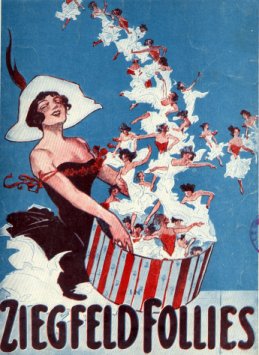
Though my fiancé is relatively “historically informed,” I don’t know why I automatically assumed that he – let alone anyone born after WWII – knew about the Ziegfeld Follies (the basis for the musical’s “Weismann Follies”).  The Ziegfeld Follies were a series of elaborate theatrical productions on Broadway in New York City from 1907 through 1931. Florenz Ziegfeld’s extravaganza was a successful marriage of just-enough naughty sex appeal and grandiose spectacle.  Colossal, elaborate, designer sets framed incredibly beautiful girls in scant, sparkly costumes and ornate headpieces.  The Follies were also the birthplace of the “variety show” and “Vaudeville” as we know it today (well, as anyone born before WWII knew it). Performers of all flavors gathered on one stage to showcase their acts to the masses.

The Ziegfeld Follies were most well-known for the famed bevy of stunning, strutting chorus girls; the trademark “Ziegfeld girls.” A bit of a hornball, Ziegfeld often personally selected the Follies Girls himself.  He wanted to glamourize and glorify the All-American Girl. On top of the requirement of being strikingly gorgeous, Ziegfeld Girls had to possess All-American wholesomeness and sex kitten allure, simultaneously. These girls reached demigoddes status among the nation’s young men.  They were often pursued and propositioned by the most wealthy and prominent men of the day.

While trying to explain this now-dead-and-buried art form to my man, I apparently got kind of excited talking about it. He asked why I spoke with such passion and appetite for such a bygone era of history and entertainment.  I guess I view the Ziegfeld Follies as something that represents a more wholesome and innocent time, culturally and aesthetically. Entertainment wasn’t as half-assed or soulless as it is now. The tried-and-true, beaten-to-death formulas we know by heart now were brand new and exciting. Sometimes, there was no formula at all, but just a collage of varied, unrelated acts, showing what they can do. Sure there was mindless shock value and sexuality back then too, but it was all live, un-Photoshopped, and real-time.  Performances were grand and “special effects” were actually special. Ziegfeld Girls weren’t just pieces of meat; they were appealing, charming, desirable pieces of meat you’d love to take home to the folks.


The Analysis:

I saw this show with my father and fiancé (then boyfriend). Both men either did or almost fell asleep at one point and avowed they did not care for the show. I will admit it was not the easiest show to get through, especially after walking around NYC all day and still being so “up” after a fantastic production of Godspell that afternoon. In all fairness, about 90% of the show’s setting resembled a cobwebby, tired, decrepit theatre; the majority of the dialogue was painfully slow; the subject matter was a real downer; and the lady seated next to us had extreme B.O. and was breathing loudly through her trache ring the whole time.  Like most Sondheim pieces, this show doesn’t pull its punches. It throws so much story and interaction and emotion at you, it’s almost impossible to digest it all in one sitting. However, I’ve got that weird lure towards offbeat characters. The characters in Follies may have had depressing stories and questionable morals, but I still found their lives and interactions and ultimate disappointments interesting to watch.

My dad found the show and characters to be tired and unenergetic with few redeeming qualities. But I saw the setting as an intentional anti-energy that meant to suck the life out of the room, because that’s how these characters feel. They’re trapped in the tattered remains of a once-glorified time and place and can only look back at their lingering ghosts. They used to be youthful and idealistic and in love, but time and reality have erased those “follies” from their lives, leaving them sad and jaded. The characters try desperately to regain their youth through re-creations of their past performances, but it’s just not the same. They can revisit the theatre, they can dance the same dances, and sing the same songs, but it only reinforces the fact that they're hollow, regretful shadows of what they once were and they can’t go back.


My brother likes to believe that his high school years were his magical, golden time and he’ll never be that happy again. My fiancé often responds to his wallowing reflections with the sage retort, “Look, don’t stare.” That is the issue with the four leads in Follies. They look longingly at their past with rose-colored glasses and are stuck in the belief that the present can’t ever be as satisfying as the past was. It must be tough spending your every waking moment, literally unable to move on from a time in your life that is long gone. 

I think that Follies is, at its core, a cautionary tale about realizing the importance of learning and growing from your past/youth instead of trying to remain there. If you compare the rest of your life to a time you've spent years glorifying in your brain, you set yourself up for disappointment.

Look, don't stare.

"If you are depressed, you are living in the past.If you are anxious, you are living in the future.If you are at peace, you are living in the present."
- Lao Tzu

Friday, May 30, 2014

Won't Forget, Can't Regret What "A Chorus Line" Did For Me

Lermontov: Why do you want to dance?
Vicky: Why do you want to live?
Lermontov: Well, I don't know exactly why, but... I must.
Vicky: That's my answer too.

― The Red Shoes

I’m going to start today’s post with the happy announcement that I just got engaged to a Nice Jewish Boy and am friggin’ ecstatic.

Ok, now that that’s done with, on to the Broadway love.  I’ve seen about 5 or 6 shows in the last 3 weeks, so I’m a little backlogged with Broadway love!

The Players Club of Swarthmore recently closed their wildly successful production of A Chorus Line and I had the honor of sitting in the audience twice for this significant musical piece. I was familiar with the music and knew it was about dancers and their stories, but I had never seen it. I am here to say that even if you’d never heard about A Chorus Line, never saw A Chorus Line, or didn't give a fuck about A Chorus Line,” you should see A Chorus Line at some point in your life (but not the film version, I hear it sucks) because, as I found out, it touches on material that transcends mere dancing and applies to us all in some form.

First of all, let’s talk about the dancing. From the first “five, six, seven, eight”, we are thrust into a world where dance is EVERYTHING. From the first note when the dancers turn and face the audience for the first time, you can hear the underlying stress and anxiety among the flying arms and legs in the music and choreography. This reflects the characters’ desperation to land this job because it means one more opportunity to dance; they want this with all their heart and soul.


A Chorus Line was originally a workshop created from a series of taped sessions with several dancers, nicknamed “gypsies.” These sessions consisted of the “gypsies” simply talking, disclosing how/why they became dancers and stories of their past. Director/choreographer, Michael Bennett, soon became involved in the workshop and ran with the concept. A Chorus Line is indeed about dancers (and they do a LOT of dancing). But it’s not your standard “a-bunch-of-dancers-put-on-a-show-to-save-the-theatre” fluff. It sheds a glaring light on a group of people who otherwise normally must make it a priority to be the frame, the wallpaper, the stage filler, the background, and the mechanically-functioning human props that showcase the “stars.” It highlights the diverse, colorful personalities of those who throw themselves at an unforgiving, merciless industry, all for just one more opportunity to dance on stage.

The show introduces us to a small handful of hopeful dancers vying for a spot in a Broadway chorus line. They are taken aback and apprehensive when casting director, Zach, asks them to tell him more about themselves than what is already on their resumés. In order to get this job, they must put not just their skills, but themselves on the line. One by one, they begin to divulge and share personal tales of their education, adolescence, home life, sexual experiences, and what inspired them to become dancers.

Cassie, once a featured dancer (and former lover of Zach’s), has returned from a less-than-stellar stint in California to pursue a role in Zach’s chorus. He tells her that she’s too good for the chorus and shouldn't be at this audition. But she doesn’t want stardom. She doesn’t want a career of dead-end movie roles or commercials or to open a studio and teach; she merely wants to dance. She is willing to "come home" to the chorus so she can do what she does best.  She puts herself on the line (Zach’s line), pleads with him to give her this job, and dances for her fracking life.

When one dancer suffers a sobering injury during auditions, Zach asks the others what they would do and how they would feel if they couldn’t dance anymore. No one has a solid answer as they grapple with the hard reality that they won’t be able to dance forever. They discuss the hardships of being in show business – aging, injuries, bills, the decline of dance-heavy shows, the lack of jobs and job security – and life after dancing. They each speculate what they would/could do for a living and resolve that no matter what happens, they will do what they love as long as they possibly can.


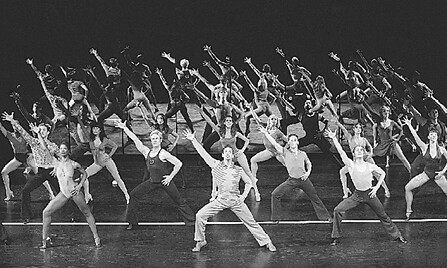
The finale, "One”, begins with an individual bow for each of the nineteen characters, their hodgepodge rehearsal clothes replaced by identical spangled gold costumes. As each dancer joins the group, it is suddenly difficult to distinguish one form the other. Each character who was an individual to the audience is now an anonymous member of an ensemble. The dancers form the iconic kick-line that continues as the curtain descends. Michael Bennett said, “… I want people in the audience to go to other shows and think about what's really gone into making that chorus . . . It fades with them kicking. That's it. That's the end of the show. There are no bows. I don't believe in bows, just the fade out. That's what a dancer's life is.”


Everyone can find at least one song or character they identify with in A Chorus Line. Be it having a less-than-stellar home life; coming to terms with sexuality; frustration from having to beg, plead, lie, steal, cheat, and fight to pursue your passion; overcoming things out of your control (like being 4’10), and changing the things you can control (like your tits and ass). A Chorus Line has an affecting, universal theme that anyone can relate to. In the Playbill listings, the show was dedicated "to anyone who has ever danced in a chorus or marched in step . . . anywhere." A Chorus Line reminds us that everyone has a face, a name, and a voice. Everyone is special.